
Sugar Beet Processing Plants
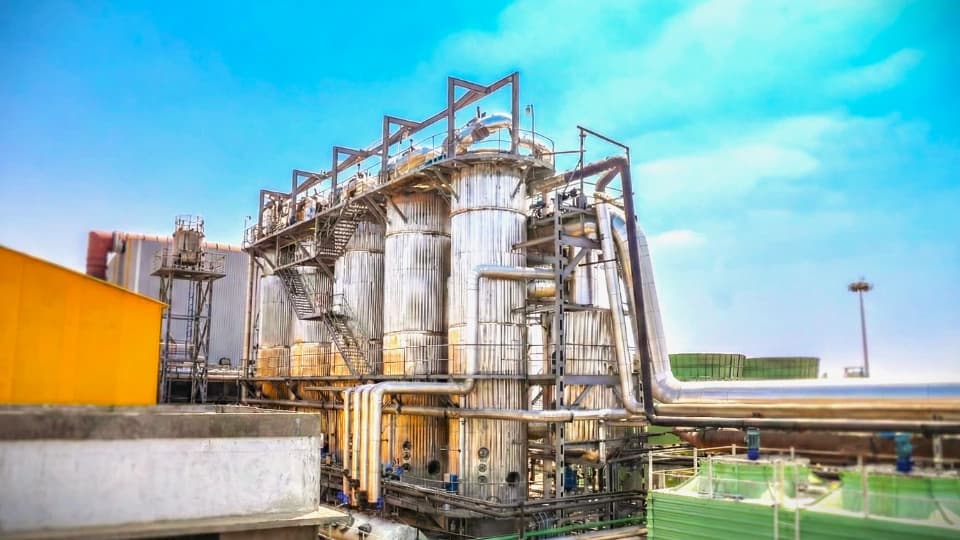
Designed for Efficient and Integrated Beet Sugar Processing greenfield plant and upgradation/rehabilitation/modernization of existing beet sugar plant for its energy consumption or expansion with the existing boiler and turbine.
Modern sugar beet processing requires precise coordination between juice extraction, pulp drying, purification, evaporation, crystallization, and thermal integration systems. A well-designed sugar beet processing plant ensures stable plant operation, controlled energy consumption, and consistent sugar recovery across all process stages.
These processing systems are designed to integrate proven beet sugar technologies with optimized steam management, condensate recovery, and heat utilization strategies. Plant configurations can be engineered for a wide range of processing capacities, from medium-scale facilities to large industrial sugar beet complexes processing several thousand tonnes of beet per day. Modular design approaches also support phased capacity expansion for future growth.
SED's experience in process integration, thermal engineering, and sugar manufacturing enables the development of beet sugar plants capable of operating efficiently under varying beet quality conditions, seasonal processing campaigns, and demanding regional environments, including cold-climate beet-growing regions.
Choose Your Plant Configuration
Brownfield Project - Upgradation / Expansion of Existing Plant
SED enables modernization, upgradation, rehabilitation, revitalization, and capacity expansion of existing beet sugar plants while retaining the existing boiler infrastructure. This is achieved through energy-efficient process house equipment capable of operating at lower vapour temperatures and pressures without compromising throughput.
Greenfield Project- Turnkey Beet Sugar Plant
SED offers a plant after the feasibility study to operate either without a boiler using MVR technology or with a conventional system, such as an integrated sugar beet plant configuration supported by externally fuelled boiler and turbine systems to meet the process steam and power requirements. The sugar beet plant is designed to operate using alternative fuels such as natural gas, coal, fuel oil and selected agro-residue fuels, depending on regional availability.
The design focuses on optimized steam distribution and energy integration across diffusion, juice purification, evaporation, and crystallization to ensure efficient and stable plant performance.
Main Plant Features
Externally fuelled boilers (natural gas/coal/fuel oil/biomass options)

Turbo alternators for power generation (as per plant load)

ZERO / Minimal heat rejection

Continuous diffusion system for sugar extraction

Juice purification (liming & carbonation)

High-efficiency multi-effect evaporators

Continuous and batch vacuum pans

Integrated condensate recovery and heat management systems

Flume water recovery and recirculation systems

Campaign-ready automation and process control systems

Cold-weather operating and insulation provisions where required

Sugar Beet Processing Flow
Beet Receiving & Washing
Slicing
Diffusion
Pulp Pressing & Drying
Juice Purification
Evaporation
Crystallization
Centrifugation
Sugar Drying & Bagging
Technology Inside the Plant
Juice Heating and Clarification
Condensate tubular heaters, advanced juice treatment processes, SRT clarifiers, and correction heating using direct contact heaters (DCH) remove impurities with minimal residence time, ensuring clear juice enters the evaporators.
Evaporation
Our Falling Film Tubular Evaporator (FFTE) and plate-type evaporators operate as some of the industry's most efficient heat exchangers, ensuring gentle juice treatment and preventing sugar inversion and colour formation.
Heat Recovery
The Flash Cigar® system recovers heat from condensate and feeds it back into the process so no energy is wasted. Condensate heat is recovered, and cooled condensate is reused.
Crystallization
Our Spray Continuous Pan (SCP®) and honeycomb calandria batch pans utilize low-temperature vapours to produce uniform, high-quality crystals while maximizing steam economy.
Juice Heating and Clarification
Condensate tubular heaters, advanced juice treatment processes, SRT clarifiers, and correction heating using direct contact heaters (DCH) remove impurities with minimal residence time, ensuring clear juice enters the evaporators.
Heat Recovery
The Flash Cigar® system recovers heat from condensate and feeds it back into the process so no energy is wasted. Condensate heat is recovered, and cooled condensate is reused.
Evaporation
Our Falling Film Tubular Evaporator (FFTE) and plate-type evaporators operate as some of the industry's most efficient heat exchangers, ensuring gentle juice treatment and preventing sugar inversion and colour formation.
Crystallization
Our Spray Continuous Pan (SCP®) and honeycomb calandria batch pans utilize low-temperature vapours to produce uniform, high-quality crystals while maximizing steam economy.
Commissioning & After-Sales Support
SED's project support extends beyond equipment supply to include:







This approach helps operators achieve stable plant performance and smoother campaign execution throughout the facility's lifecycle.
Frequently Asked Questions
Sugar recovery depends on beet quality and plant operation. SED designs integrated systems to support high sugar recovery and reduced process losses.
Purification and process control systems help maintain stable operation despite variations in beet quality, juice purity, and non-sugar content.
It uses diffusion systems, liming and carbonation, multi-effect evaporators, vacuum pans, and heat recovery systems.
Yes, plant configurations can include provisions for phased capacity expansion to support future production growth.
SED designs it with integrated diffusion, purification, evaporation, crystallization, and heat recovery systems.
Yes, it undertakes modernization, upgradation, rehabilitation, revitalization, and expansion projects to improve plant efficiency, capacity, and steam economy.
End-to-End Project Execution
Turnkey execution may include process engineering, equipment supply, system integration, installation support, commissioning assistance, and operational support.
 Talk to Our Experts